
A DIY renovation usually starts with plenty of enthusiasm. The shopping has been done, the tools are ready, and the plan seems straightforward enough. Then the work begins, and the little interruptions start creeping in. The tape measure has vanished again. The screws needed for the next step are somehow mixed in with three other boxes. All the extra and spare parts and bits are still in the garage, but the drill is downstairs. By itself, none of those items seem like a big issue. However, they snack away at the day in silence together. That frequently makes the difference between a project that feels doable and one that becomes frustrating.
Sort the Basics Before the Job Begins
There is always the temptation to get started straight away. That’s generally the fun part, after all. Even yet, setting up the workstation ahead of time frequently saves a lot more time. Keep frequently used tools like your drill, tape measure, pencil, utility knife, and spirit level within easy reach to avoid wasting time searching for them.
The smaller pieces deserve a bit of attention too. Screws, hinges, brackets and wall plugs have a habit of becoming one confusing collection after they have been removed. It is one of those things that seems harmless until the moment a particular size or fitting is needed. A few small tubs or labelled bags solve that problem before it starts.
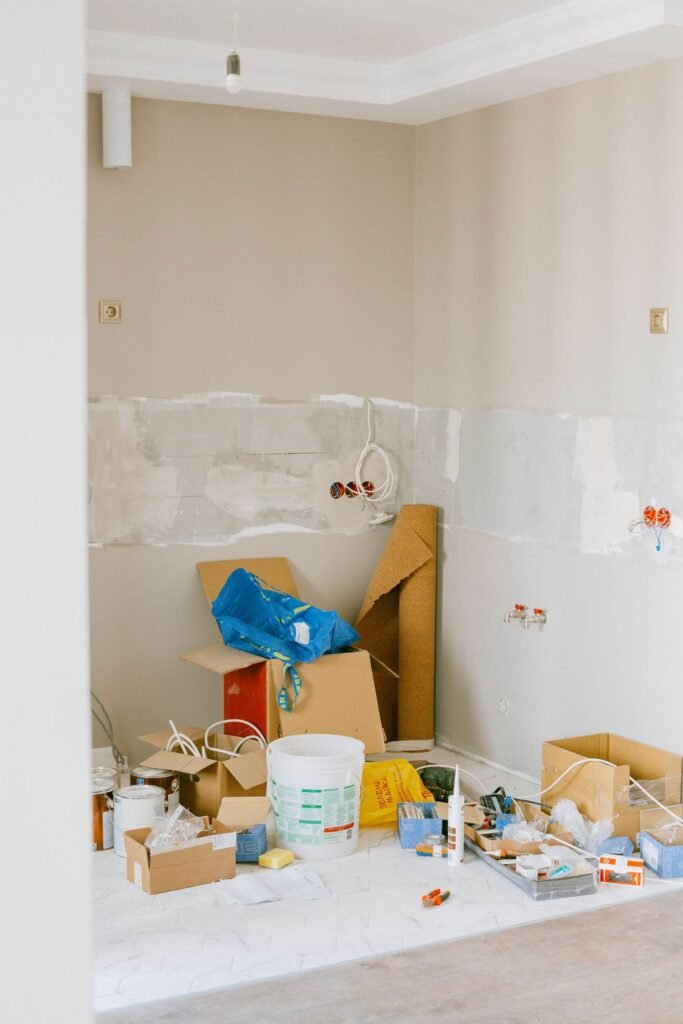
Then there is the rubbish. Cardboard, plastic wrapping, empty tubes, offcuts and broken bits of tile seem to appear from nowhere. Leaving them where they fall makes the space feel smaller with every hour that passes. A quick tidy now and then keeps the area comfortable to work in and stops the mess from becoming another job later.
Protect What Is Already Finished
Most people have a story about damaging something that was never meant to be part of the renovation. Sometimes it is a paint splash on a skirting board. Sometimes a toolbox leaves a mark across a timber floor. Other times a freshly painted wall gets brushed while carrying something bulky through the room. One of those tasks that seems sluggish at first but frequently saves a lot more time than it takes is covering surrounding furniture and floors before beginning the project. Masking tape, a roll of builder’s paper, and a few dust sheets are typically sufficient to avoid issues that are unexpectedly difficult to resolve later.
Keep Materials Within Reach
This is not difficult, yet it has a very significant impact. The process begins to become a walking exercise when the paint is kept in one room, the wood is outdoors, the flooring is upstairs, and the fasteners are someplace in the garage. At first, those extra walks don’t seem significant, but they quickly become one of the biggest time wasters. It feels less stop-and-start when similar materials are grouped together. The next job can begin without hunting around the house first.
Bulky materials also deserve proper storage. Many homeowners, builders and renovators buy pallets online because they provide a sturdy base for timber, flooring packs, plasterboard and other heavy supplies. Keeping materials off the floor also helps protect them from damp while making them easier to move when needed.
Give Cutting Tools One Permanent Home
Moving a saw from room to room rarely saves as much time as people expect. Setting up one cutting area at the start of the project usually works better. Whether it is the garage, the driveway or a sheltered spot outside, having everything in one place means less carrying equipment around and less setting up every time another cut is needed.
It also keeps most of the sawdust and offcuts away from the finished parts of the house, which is something many people appreciate by the end of the day.
Buy Better Where It Makes Sense
Every tool does not have to be expensive. Even so, there are a few things that earn their keep. A paint brush that keeps its shape is easier to work with than one that sheds bristles. A sharp utility knife makes cleaner cuts with less effort. A reliable tape measure is one less thing to question when accuracy matters.
Those tools also tend to last much longer if they are looked after properly. Cleaning brushes, replacing worn blades and putting equipment away at the end of the day takes very little effort compared with replacing them sooner than necessary.
The Little Habits Matter More Than Most People Think
The smoothest DIY projects are rarely the fastest ones. They are simply the projects with fewer interruptions.
Putting a tool back instead of leaving it on the nearest surface. Taking another look at a measurement before making a cut. Sweeping up before calling it a day instead of leaving everything for tomorrow morning.
Final Thoughts
The majority of do-it-yourself home renovations and improvements don’t suddenly become challenging. They frequently become annoying as a result of several minor annoyances that gradually accumulate.
The renovation or DIY projects becomes much easier to handle with a sensible workstation, easily accessible items and parts, dependable tools, and a few effective routines mentioned above. Once the job starts, they frequently have the greatest impact, making the activity feel less stressful and much more rewarding from start to finish.